Selling Internationally
Ecommerce Localization Checklist: 10 Things to Check
Use this ecommerce localization checklist to prepare product pages, catalog details, images, prices, and localized SEO for a new market.
Learn how to translate product descriptions for Shopify with local terms, accurate product data, units, and a practical quality check.

To translate product descriptions for Shopify, start with the product facts, then adapt the words shoppers use in each market. A literal translation can keep the material and dimensions right while still making the product sound unfamiliar. The goal is a page that answers the same buying questions in a new language, with local terms, units, and search phrasing.
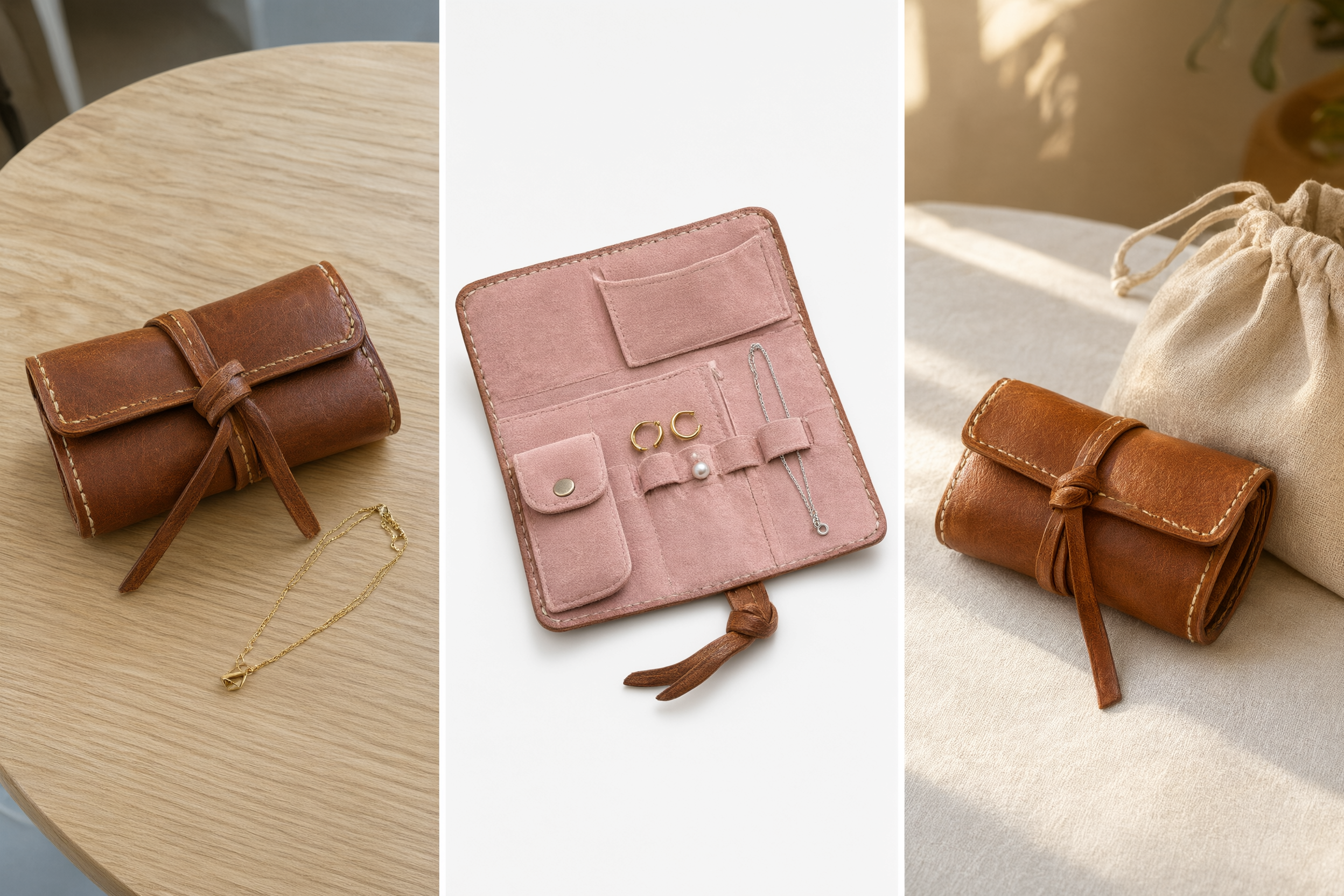
Use one product as a test before changing a full catalog. This guide uses a sample leather travel jewelry roll made for this article. It shows how to protect the product facts while changing the language around them.
Translation changes language. Localization changes the parts of a listing that depend on the shopper and market. That includes measurement units, size names, color words, local search terms, delivery context, and the level of detail buyers expect.
For a leather jewelry roll, the core facts do not change: it is made from leather, it rolls closed, and it stores rings, earrings, and a necklace. The English phrase “travel jewelry organizer” might not be the phrase a French shopper searches. A useful localized page may use a local category term, write centimeters instead of inches, and explain that the roll keeps pieces separated during travel.
Shopify lets merchants add and publish store languages, then display translated content to shoppers in those languages. Its localization and translation guidance also explains that product details can be translated through the Translate & Adapt app, CSV files, or compatible apps. The workflow matters more than the method: keep the source facts in one place, then review each market version.

Do not hand a translator a finished paragraph and hope the product details survive. Make a small source sheet first. It prevents a translated listing from inventing claims or dropping details that affect a purchase.
Keep claims and marketing language in separate columns. Facts should stay stable. Marketing language can change by market. For example, “compact” may work in one country while another audience responds better to the specific carry-on use case. This split makes it easier to translate product descriptions without drifting from the actual item.
The source sheet also gives a reviewer something concrete to check. If the Spanish or French page says the roll has a zip closure when the source sheet says a tie closure, the problem is obvious. That is safer than comparing long paragraphs side by side after the listing is live.
Product keywords are not a dictionary exercise. Search the local market for the product category, then look at the words used by retailers, marketplace filters, and customer questions. Capture the product noun, material term, use case, and one or two modifiers. Use those terms only where they fit the product truthfully.
For the sample jewelry roll, research might show that shoppers use different terms for “jewelry case,” “travel organizer,” or “jewelry pouch.” The localized title should use the term with the clearest product match. The description can add related natural phrasing, rather than repeating every keyword.
Check the details around the main copy too. Size units, currency references, date formats, color names, and care language should feel normal in the target market. If a product needs a size conversion, retain the original approved measurement in your product data and state the converted unit consistently. Do not round measurements in one bullet and use a different value in the body.
Images need localization review as well. An image with embedded English text becomes a broken promise on a translated page. The sample images below contain no embedded copy, so the same photography can support several languages. If your images include labels, charts, or callouts, make localized versions before publishing.

A weak source line might read: “Nice leather jewelry case for travel.” That sentence gives a translator little to work with. A better source says: “Leather travel jewelry roll with separate loops for rings and earrings, a pocket for small pieces, and a strap closure.” The second version supplies the function, the storage layout, and the closure without piling on vague adjectives.
When you translate product descriptions, keep the first paragraph focused on the item and buyer benefit. Put materials, dimensions, and care details where a shopper can scan them. This helps the page work in every language because the structure is doing part of the clarity work.
Use a reviewer who can read the market language naturally. The reviewer does not need to rewrite every sentence. They should catch the errors that change meaning, reduce trust, or create returns.
Track the review result by product and market. A simple approved, needs edit, or blocked status stops the same issue from returning in the next catalog update. Once the test batch performs well, repeat the same workflow for the remaining catalog.
For stores with frequent product changes, the work is easier when one owner checks what is missing, prepares product facts, creates translated copy and images, then publishes only inside the rules the store sets. Agerta can help keep that product-content workflow organized across the markets where you sell.
Translate product descriptions as a product-data task, not a final copy-paste step. Start with verified facts, use local buyer language, preview the complete listing, and scale only after the first market batch is accurate.
Your agentic office
Your Store Manager finds products missing photos, descriptions or details, writes titles and descriptions in every language you sell in, and prepares product photos and videos for your Shopify or WooCommerce store. Store changes wait for your approval until you let routine updates through.
Selling Internationally
Use this ecommerce localization checklist to prepare product pages, catalog details, images, prices, and localized SEO for a new market.
Product Video
Use this product video checklist to plan clear listing clips that answer buyer questions, show real product details, and work on mobile.
Store Automation
Learn which product data audit checks to automate, which need human review, and how to fix listing gaps across an online store.